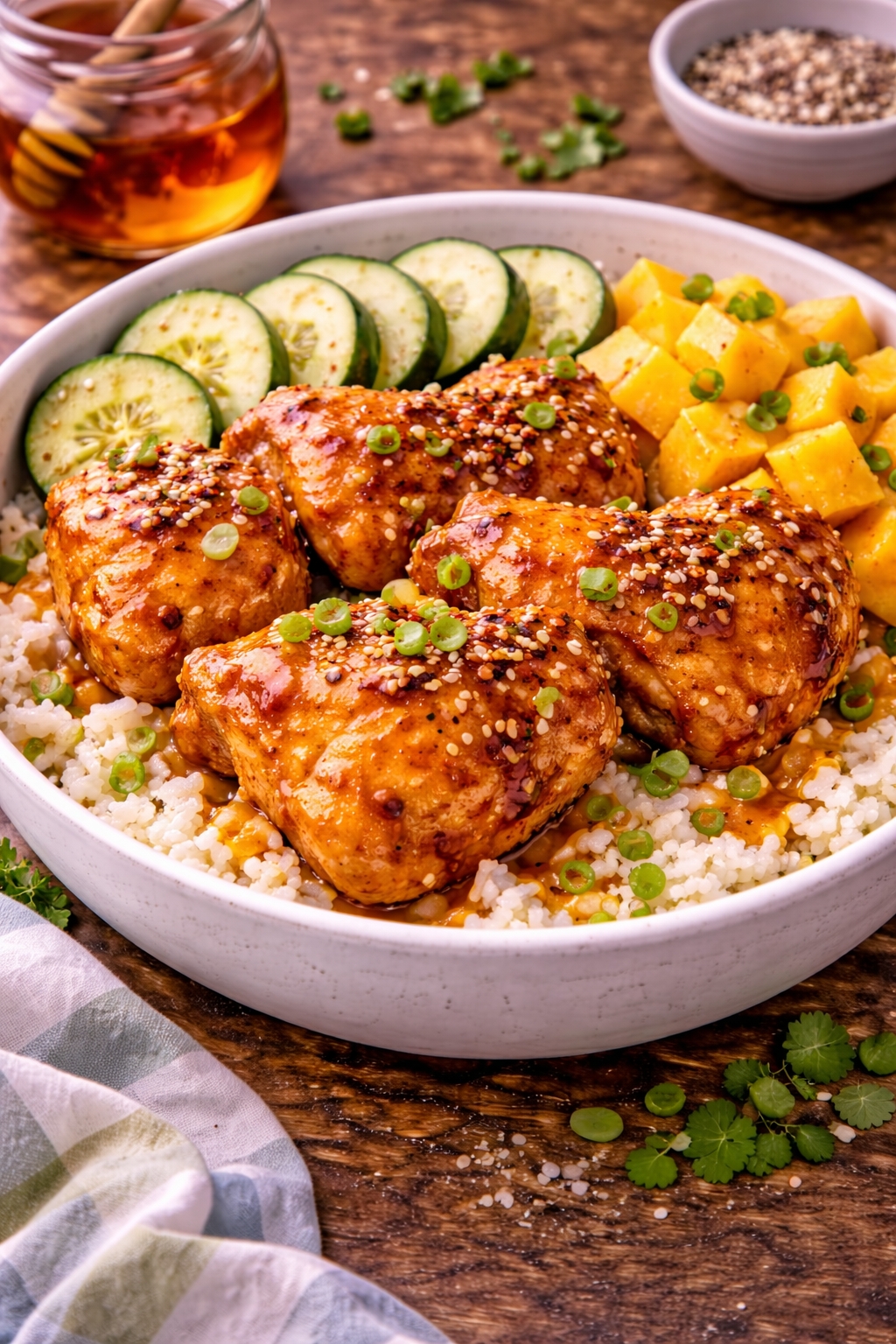
Sticky Mango Chili Chicken Rice Bowl - Sticky mango chili chicken rice bowl is one of the strongest modern examples of a swicy recipe, combining the bold sweetness of ripe mango with the heat of chili into a glossy, sticky, high-impact dish that delivers both comfort and excitement in every bite. This type of recipe performs extremely well because it hits multiple sensory triggers at once. It is visually striking, deeply flavorful, texturally balanced, and easy enough to recreate at home without advanced cooking skills. The chicken is cooked until golden and slightly crisp, then coated in a thick mango chili glaze that clings to the surface and creates that signature shiny finish people associate with viral food content. The sweetness from the mango is natural and slightly tropical, which pairs perfectly with the deeper heat from chili flakes and the savory base provided by soy sauce and garlic. When this glazed chicken is placed over a bowl of warm rice and paired with fresh toppings like cucumber, sesame seeds, and herbs, the result is a dish that feels complete, balanced, and incredibly satisfying. This is exactly the type of meal people search for when looking for sticky chicken, mango chicken, chili chicken rice bowl, easy swicy recipe, or quick dinner ideas that feel exciting but are still practical for everyday cooking.
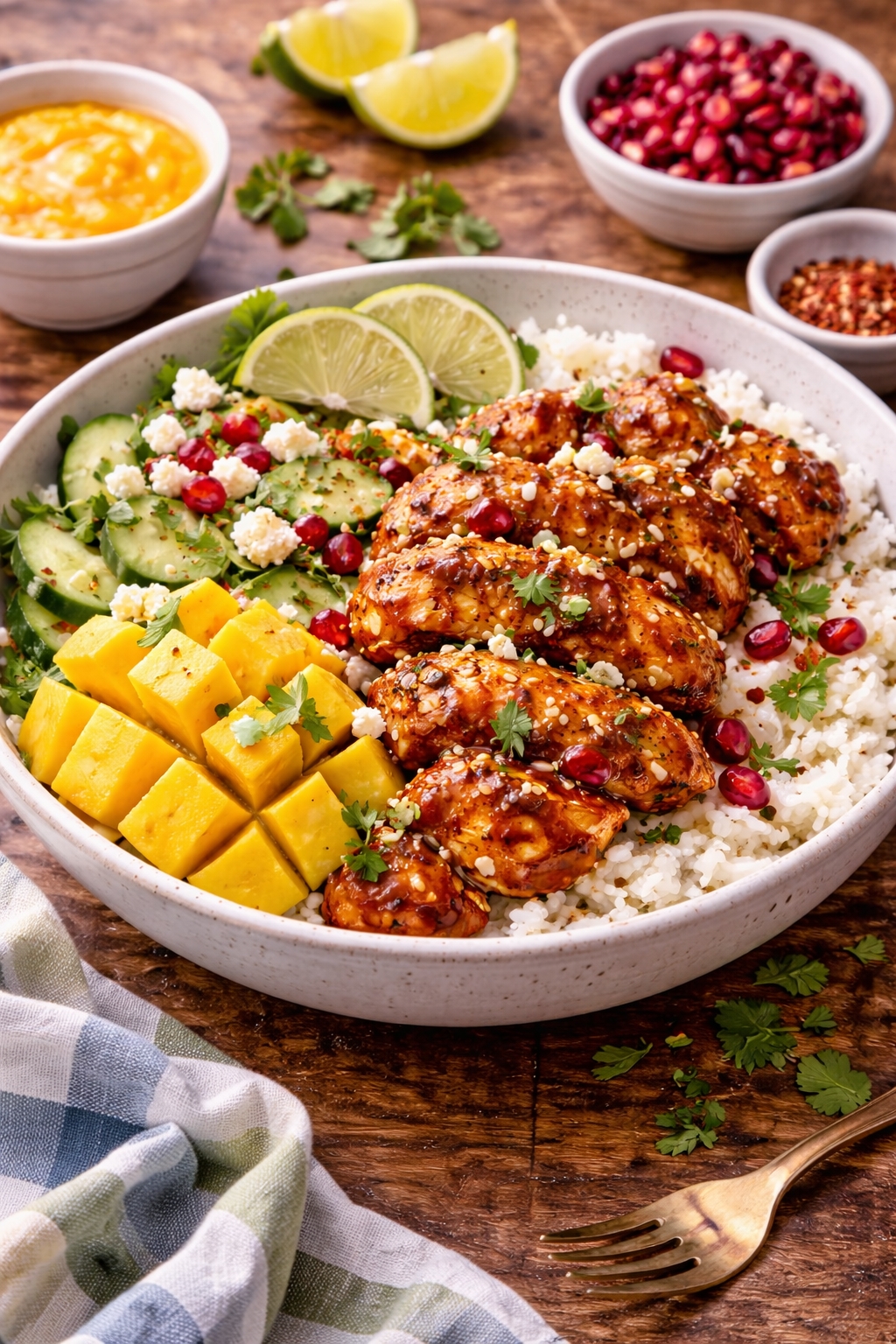
Sticky Mango Chili Chicken Rice Bowl - What makes this sticky mango chili chicken rice bowl work so well is the intentional balance between flavor, texture, and structure. The chicken itself acts as the main protein and flavor carrier, and using chicken thighs instead of breast ensures that the meat remains juicy even after being cooked at higher heat. A proper sear is essential because it builds the base layer of flavor and gives the chicken enough structure to hold the sauce without becoming soggy. The glaze is where the recipe truly comes to life. Mango puree provides both sweetness and natural thickness, allowing the sauce to reduce into a sticky coating instead of remaining thin and watery. Honey enhances this sweetness while also contributing to the glossy finish, and soy sauce brings in salt and umami to keep the flavor from becoming one-dimensional. Garlic adds depth and aroma, while chili flakes introduce adjustable heat that can be scaled depending on preference. The key technique here is reduction. Letting the sauce simmer until it thickens ensures that it clings properly to the chicken, creating that lacquered appearance that defines high-performing swicy dishes. The rice base is intentionally simple, acting as a neutral canvas that absorbs extra sauce and balances the stronger flavors of the chicken. Without this base, the dish would feel too intense, but with it, every bite becomes more rounded and satisfying. The toppings are not just decorative. They are essential for contrast. Fresh cucumber adds crunch and cooling freshness, sesame seeds provide subtle nuttiness and visual detail, and herbs like green onions or cilantro bring brightness that lifts the entire dish. This contrast between hot sticky chicken and cool crisp toppings is what makes the bowl feel complete rather than heavy. Another important element is presentation. This recipe is designed to look as good as it tastes. Arranging the chicken neatly over rice, adding cucumber in clean sections, and finishing with a zig-zag drizzle of extra glaze creates a composition that performs extremely well visually. That glossy sauce line across the top is not just aesthetic. It signals flavor and richness, which increases engagement and perceived value. The method is straightforward but relies on attention to detail, which aligns with my focus on technique over complexity. Timing, heat control, and layering are what elevate this from a simple chicken and rice dish to a standout recipe. The final result is a bowl that delivers sweet heat, savory depth, textural contrast, and strong visual appeal, making it one of the most effective and repeatable swicy recipes for both home cooking and content creation.
Dietary Notes
- ✓ Swicy Trend
- ✓ High Protein Meal
- ✓ Rice Bowl
- ✓ Viral Recipe
- ✓ Meal Prep Friendly
♥
Why You'll Love This
- Swicy Flavor Balance: The combination of mango sweetness and chili heat creates a powerful contrast that keeps the dish exciting and highly craveable.
- Glossy High-Impact Finish: The reduced mango chili glaze gives the chicken a sticky, shiny coating that makes the recipe visually appealing and perfect for high-engagement content.
- Fast Weeknight Option: Simple ingredients and quick cooking time make this an ideal recipe for busy schedules without sacrificing flavor.
- Texture Contrast: Crispy chicken, soft rice, and fresh toppings ensure that every bite feels dynamic and satisfying.
Sticky Mango Chili Chicken Rice Bowl
👩🍳 Author: Abderrahmane
⏰ Prep Time: 20min
❄️ Cool Time: 5
🔥 Cook Time: 20min
🥨 Yield: 2
🍞 Method: Stovetop
🌾 Diet: None
★
★
★
★
★
Leave a review
1x
2x
3x
Ingredients
- 2 chicken thighs
- 1/2 cup mango puree
- 1 tsp chili flakes
- 2 cloves garlic
- 2 tbsp soy sauce
- 1 tbsp honey
- 1 tbsp olive oil
- 2 cups cooked rice
- 1 cucumber
- 1 tbsp sesame seeds
- 1/4 cup green onions or cilantro
- to taste salt and pepper
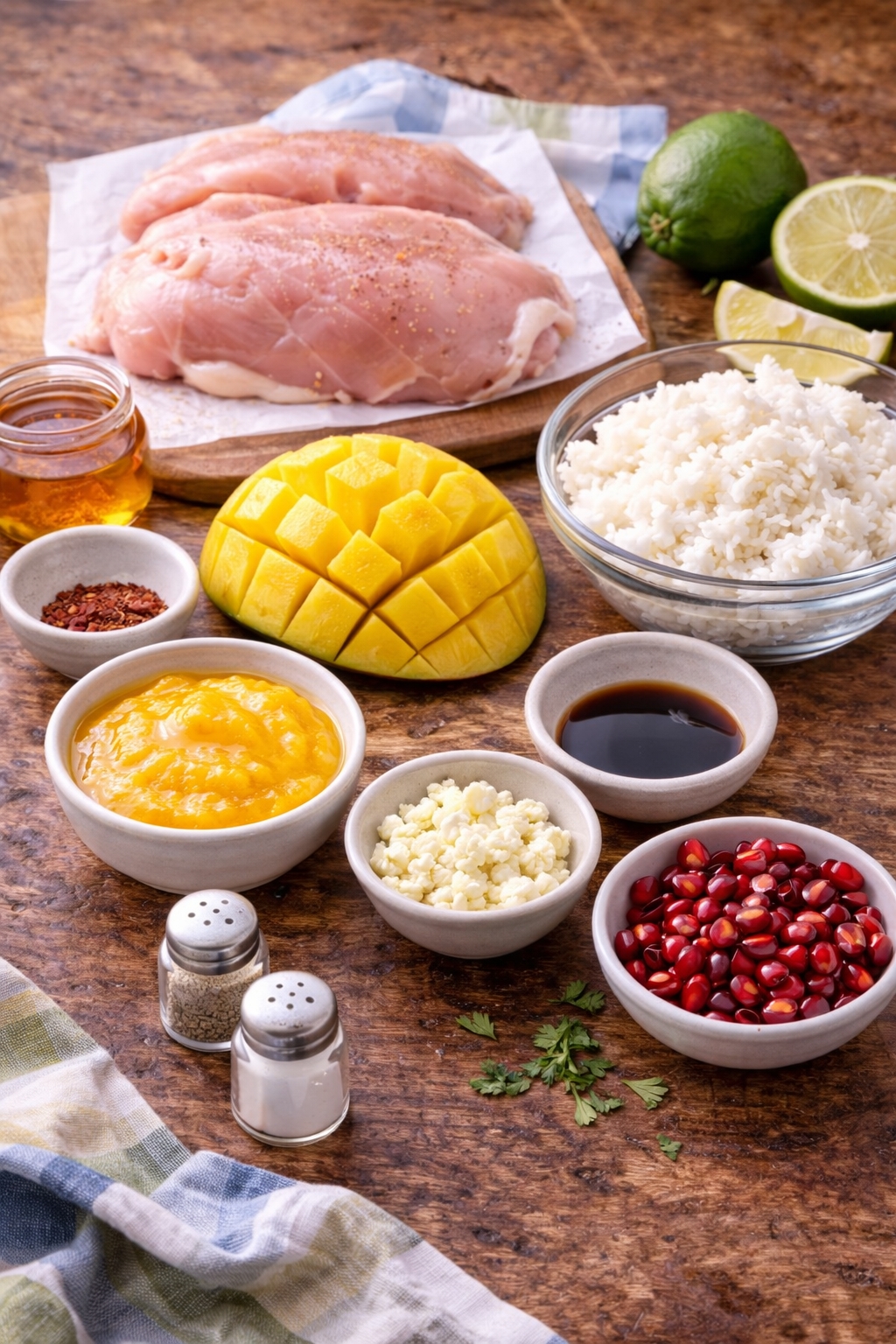
Ingredient Notes:
- chicken thighs Stay juicy and hold glaze well.
- mango puree Adds sweetness and thickness.
- chili flakes Provides heat for swicy balance.
- soy sauce Adds umami depth.
- honey Creates sticky glossy texture.
Instructions
-
1Step 1: Season chicken and cook until golden and crispy.
-
2Step 2: Simmer mango, honey, garlic, chili, and soy sauce until thick.
-
3Step 3: Toss chicken in glaze until coated.
-
4Step 4: Plate rice and add chicken.
-
5Step 5: Add toppings and drizzle sauce.
Nutrition Facts
Calories 480
Protein 28g
Carbs 50g
Fiber 3g
Sugar 14g
Fat 18g
Sodium 600mg
Potassium N/A
Serving Suggestions
Serve the sticky mango chili chicken rice bowl immediately after cooking to experience the best balance of textures and flavors. Start by placing a generous portion of warm rice into a wide bowl, creating a smooth base that can absorb the sauce. Arrange the glazed chicken pieces over the top in an even layer so that each portion receives enough of the sticky coating. Add sliced cucumber along one side of the bowl to create a visual contrast and provide a cooling element that balances the heat of the glaze. Finish by drizzling extra mango chili sauce in a zig-zag pattern across the chicken, then sprinkle sesame seeds and chopped herbs evenly over the top. This final drizzle is essential because it enhances both the appearance and the flavor intensity of the dish. For an even more striking presentation, you can add thinly sliced red chili or a few mango cubes for color variation. This dish works well on its own but can also be paired with light sides like steamed greens or a simple salad. The best serving experience comes when the chicken is hot and glossy, the rice is soft and warm, and the toppings remain fresh and crisp, creating a layered eating experience that feels both balanced and satisfying.
How to Store?
Store leftovers in airtight containers in the refrigerator for up to 3 days, keeping the chicken and rice separate from fresh toppings for the best results. When reheating, use a pan over medium heat to warm the chicken and restore the glaze, adding a small amount of water if needed to loosen the sauce. This helps maintain the sticky texture instead of drying it out. Rice can be reheated with a splash of water to bring back moisture and softness. Fresh toppings like cucumber and herbs should always be added after reheating to maintain their crispness and bright flavor. This recipe is not ideal for freezing once fully assembled because the texture of the vegetables and sauce can degrade, but the cooked chicken alone can be frozen and reheated later if needed. For meal prep, prepare all components ahead of time and assemble just before serving to maintain the best quality. The versatility of this recipe allows leftovers to be repurposed into wraps, salads, or even noodle dishes, making it a practical option for multiple meals.
If you enjoyed this Sticky Mango Chili Chicken Rice Bowl or any other recipe on my blog,
please leave a ⭐ star rating and let me know how it went
in the comments below. I appreciate you taking time to read about this recipe, thank you!


Leave a Comment