Japanese Salt Bread (Shio Pan — Buttery Hollow Rolls) - Japanese salt bread, also known as shio pan bread, is the viral bakery trend that combines milk bread rolls softness with a hidden butter center that melts into a crisp, golden base and a light, airy interior. Each roll tastes like a buttery bread recipe with delicate chew, subtle savoriness, and a clean salty finish, making this salt bread recipe feel bakery-level without complicated lamination. The contrast of tender crumb, glossy crust, and coarse salt on top creates the pull-apart, café-style texture Pinterest loves in japanese bakery bread pins. Perfect for breakfast spreads, sandwich buns, or Asian bakery recipes collections, this trending bakery creation is simple enough to repeat yet dramatic enough to save and share.

Japanese Salt Bread (Shio Pan — Buttery Hollow Rolls) - This salt bread recipe works because it uses milk bread technique for softness, then leverages a butter core and high heat to create a crisp bottom and that signature hollow pocket that makes shio pan bread feel so special. After testing versions with room-temperature butter and versions with melted butter brushed on top, the most consistent “buttery hollow rolls” result came from chilling shaped butter sticks and sealing them inside each piece of dough. That cold butter delays melting, and as the roll hits the oven, the butter melts and steams, creating internal lift and a slightly hollow, airy structure. It is not laminated like a croissant, but it captures croissant-like butteriness with the simplicity and tender crumb of japanese bakery bread. The dough itself is closer to milk bread rolls: enriched with milk for softness, a little sugar for yeast activity, and enough fat to keep the crumb tender for days. Kneading is key. A properly kneaded dough develops gluten so it can stretch around the butter without tearing; that elasticity is what lets the interior expand and stay airy rather than collapsing. After trying shorter mixing times, the rolls tasted fine but lacked the pull-apart structure; the fix was kneading until the dough becomes smooth and elastic, and a windowpane test confirms the network is strong enough. Fermentation is equally important. A warm first rise builds flavor gently and improves the softness associated with soft homemade bread ideas, while a brief bench rest relaxes the dough so shaping becomes easier and seams seal tightly. Shaping is the technical moment that makes shio pan bread recognizable: rolling a triangle of dough around the butter and finishing with the seam underneath helps trap butter, and placing the seam down keeps the roll from uncoiling. Coarse salt is not decoration only; it creates contrast, making a buttery bread recipe taste balanced and savory rather than heavy. The baking setup matters too. If the pan is not hot enough, butter melts and spreads without crisping the bottom. Preheating a sheet pan or using a dark pan encourages the butter to sizzle and fry the base slightly, which is the hallmark of a great salt bread recipe and the reason these rolls photograph so well. I also found that a quick egg wash gives a glossy finish that reads as bakery aesthetic and improves color for trending bakery creations. This aligns with my focus on technique over complexity: strong kneading, controlled fermentation, cold butter core, and smart baking heat create professional results without complicated pastry steps. The method is straightforward but delivers professional results because it respects dough behavior and timing. If you want Asian bakery recipes that feel modern, this japanese salt bread sits perfectly in that café lane—milk bread rolls tenderness, crisp buttery base, and a salty finish that makes you reach for another. It also suits early adoption traffic because the “shio pan bread” keyword is rising, and this salt bread recipe hits multiple Pinterest search intents at once: japanese bakery bread, buttery bread recipe, viral bakery trend, milk bread rolls, and soft homemade bread ideas.
Dietary Notes
- ✓ Bakery-Style Pull-Apart Rolls
- ✓ Buttery Hollow Centers
- ✓ Café-Inspired Baking
- ✓ Make-Ahead Dough Friendly
♥
Why You'll Love This
- Signature Crispy Butter Base: Cold butter melts during baking to create a golden, crisp bottom and airy hollow center.
- Soft Milk Bread Texture: Enriched dough bakes into tender milk bread rolls that stay soft and satisfying.
- Viral Bakery Trend Appeal: Shio pan bread delivers a bakery aesthetic finish that performs well for saves and shares.
- Repeatable Results: Tested shaping and fermentation timing make certain the butter stays trapped and the rolls bake evenly.
Japanese Salt Bread (Shio Pan — Buttery Hollow Rolls)
👩🍳 Author: Abderrahmane
⏰ Prep Time: 35min
❄️ Cool Time: 20
🔥 Cook Time: 18min
🥨 Yield: 10
🍞 Method: Baking
🌾 Diet: Vegetarian
★
★
★
★
★
Leave a review
1x
2x
3x
Ingredients
- 3 cups bread flour
- 2 tbsp granulated sugar
- 2 tsp instant yeast
- 1 tsp fine sea salt
- 1 cup whole milk, warm
- 1 large egg
- 3 tbsp unsalted butter, softened (for dough)
- 10 sticks (about 70g total) unsalted butter, cold and cut into sticks (for filling)
- 1 egg (for egg wash)
- 1 tbsp water (for egg wash)
- 1 1/2 tsp coarse flaky salt
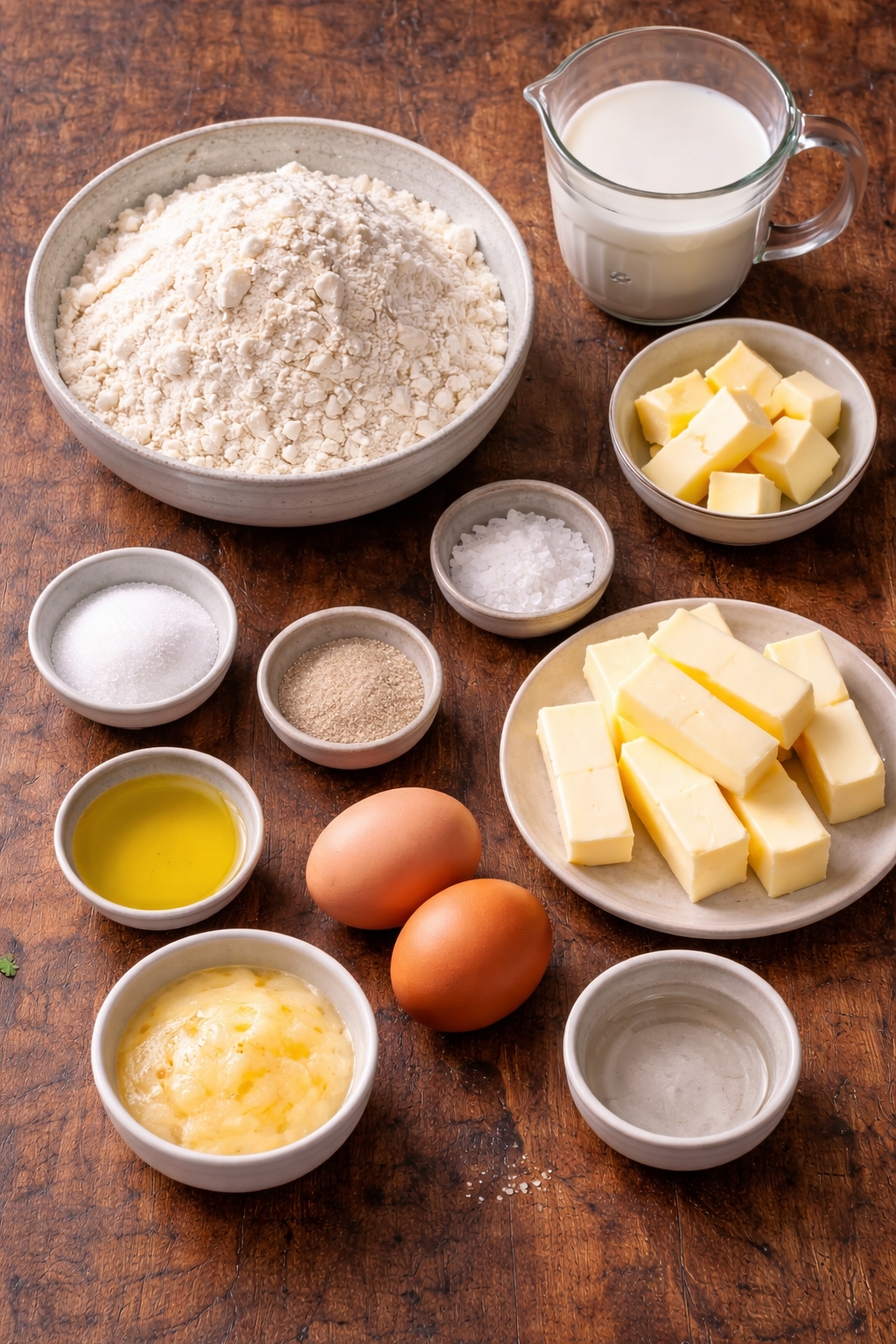
Ingredient Notes:
- bread flour Bread flour provides higher protein so gluten develops strong enough to trap steam from the butter core; that strength helps shio pan bread rise into airy, buttery hollow rolls instead of spreading flat like soft rolls with weak structure.
- granulated sugar A small amount of sugar feeds yeast and supports browning without making the bread sweet; it keeps this salt bread recipe in the savory lane while still delivering the golden bakery aesthetic people expect from japanese bakery bread.
- instant yeast Instant yeast offers consistent rise and is forgiving for home bakers; a steady fermentation is key for milk bread rolls softness and helps this viral bakery trend recipe stay repeatable even when your kitchen temperature changes.
- fine sea salt Fine salt seasons the dough evenly and keeps flavor balanced; it strengthens gluten slightly, supporting soft homemade bread ideas texture, while the coarse flaky salt added later provides the signature shio pan bread salty contrast.
- whole milk, warm Warm milk enriches the dough and makes the crumb tender, which is why milk bread rolls feel soft and pull-apart; keep milk warm, not hot, so yeast stays active and the salt bread recipe rises reliably.
- large egg Egg adds richness and helps the crumb set into a fine, tender structure; it also improves browning so these buttery bread recipe rolls look glossy and café-worthy, perfect for trending bakery creations saves.
- unsalted butter, softened (for dough) Butter in the dough makes the crumb tender and keeps rolls soft longer; adding it after initial kneading helps gluten form first, which is essential for japanese salt bread structure and the airy shio pan bread bite.
- unsalted butter, cold and cut into sticks (for filling) Cold butter is the signature technique: it melts in the oven, creating steam and a buttery pocket that forms hollow centers and fries the base lightly; this is what makes shio pan bread a true buttery bread recipe with crisp-bottom contrast.
- egg (for egg wash) Egg wash creates glossy, deep golden color that screams bakery aesthetic; brushing gently prevents deflating the proofed dough and makes these japanese bakery bread rolls look professional without extra steps.
- water (for egg wash) A splash of water thins egg wash so it brushes evenly and avoids thick streaks; even coating improves browning and helps the salt bread recipe finish look smooth and consistent for photos.
- coarse flaky salt Coarse flaky salt gives the final savory pop that defines shio pan bread; sprinkle lightly so each bite has contrast, balancing butter richness and making this viral bakery trend taste addictive rather than one-note.
Instructions
-
1Step 1: Mix bread flour, sugar, instant yeast, and fine sea salt in a bowl, then add warm milk and egg and stir until a shaggy dough forms - combining dry first distributes yeast evenly for reliable milk bread rolls rise and a consistent salt bread recipe crumb.
-
2Step 2: Knead 8–10 minutes until smooth and elastic, then work in softened butter until fully absorbed - strong gluten development helps the dough stretch around the butter core, creating airy shio pan bread structure instead of tearing.
-
3Step 3: Cover and let dough rise 60–75 minutes until doubled - a full first rise builds softness and light flavor, supporting soft homemade bread ideas texture and the bakery aesthetic pull-apart look.
-
4Step 4: Portion dough into 10 equal pieces, shape into balls, and rest 10 minutes - resting relaxes gluten so shaping becomes easy and seams seal tightly for buttery hollow rolls.
-
5Step 5: Roll each piece into a small oval, then into a triangle, keeping the tip thin - the thin tip wraps cleanly and helps shio pan bread keep its signature shape in the oven.
-
6Step 6: Place a cold butter stick at the wide end and roll tightly toward the tip, sealing the seam underneath - cold butter delays melting so it steams and creates the hollow interior that defines this buttery bread recipe.
-
7Step 7: Arrange rolls seam-side down on a parchment-lined pan and proof 30–40 minutes until slightly puffy - a controlled proof gives the dough lift so the viral bakery trend texture turns airy, not dense.
-
8Step 8: Preheat oven to 400°F and, if possible, preheat a second sheet pan - higher heat and a hot surface help butter sizzle and crisp the bottoms for the classic salt bread recipe finish.
-
9Step 9: Brush rolls with egg wash, sprinkle with coarse flaky salt, and bake 15–18 minutes until deep golden - egg wash adds glossy japanese bakery bread shine and salt adds contrast that makes shio pan bread addictive.
-
10Step 10: Cool 15–20 minutes before tearing open - cooling sets the crumb so pull-apart shots show an airy interior while the buttery base stays crisp, perfect for trending bakery creations photos.
Nutrition Facts
Calories 220
Protein 6g
Carbs 28g
Fiber 1g
Sugar 4g
Fat 10g
Sodium 420mg
Potassium N/A
Serving Suggestions
Serve japanese salt bread warm when the butter aroma is strongest and the base is still crisp, which highlights the buttery bread recipe character. For a café-style board, pile milk bread rolls on a wooden tray with visible coarse salt crystals and a few torn-open pieces to show the airy interior, then offer butter, jam, or honey for breakfast spreads. These shio pan bread rolls also work as sandwich buns: split and fill with egg salad, chicken, or simple cheese for a savory lunch that still feels like japanese bakery bread. For the best pull-apart bread shots, let the rolls cool 10–15 minutes so the crumb sets, then tear gently; the interior stays soft and the base stays crisp, giving that viral bakery trend texture contrast.
How to Store?
Store cooled salt bread recipe rolls in an airtight container at room temperature for up to 2 days; the enriched dough keeps milk bread rolls tender, but the crisp base is best on day one. To refresh, reheat in a 325°F oven for 6–8 minutes to re-crisp the bottom and revive the buttery aroma; microwaving can soften the base and reduce the bakery aesthetic crunch. For longer storage, freeze rolls in a single layer, then transfer to freezer bags for up to 2 months; thaw at room temperature and warm in the oven to restore texture. For make-ahead baking, you can shape the shio pan bread rolls, refrigerate overnight for a slow proof, then bake the next morning—this supports soft homemade bread ideas and trending bakery creations planning without changing the final flavor.
If you enjoyed this Japanese Salt Bread (Shio Pan — Buttery Hollow Rolls) or any other recipe on my blog,
please leave a ⭐ star rating and let me know how it went
in the comments below. I appreciate you taking time to read about this recipe, thank you!


Leave a Comment