Roasted Bok Choy and Miso Bowl - This roasted bok choy and miso bowl is a savory, deeply satisfying vegetable-forward meal with caramelized greens, a rich umami dressing, and a hearty bowl-style presentation that feels nourishing and complete. The bok choy roasts until the edges turn crisp and lightly charred while the centers stay tender and juicy, creating layered texture in every bite. A miso-based sauce coats the vegetables and grains with salty depth and subtle sweetness, making the bowl taste comforting without feeling heavy. This roasted bok choy dinner works perfectly as a healthy cabbage family meal that is filling, visually striking, and ideal for weeknight dinners or protein-focused veggie bowls.
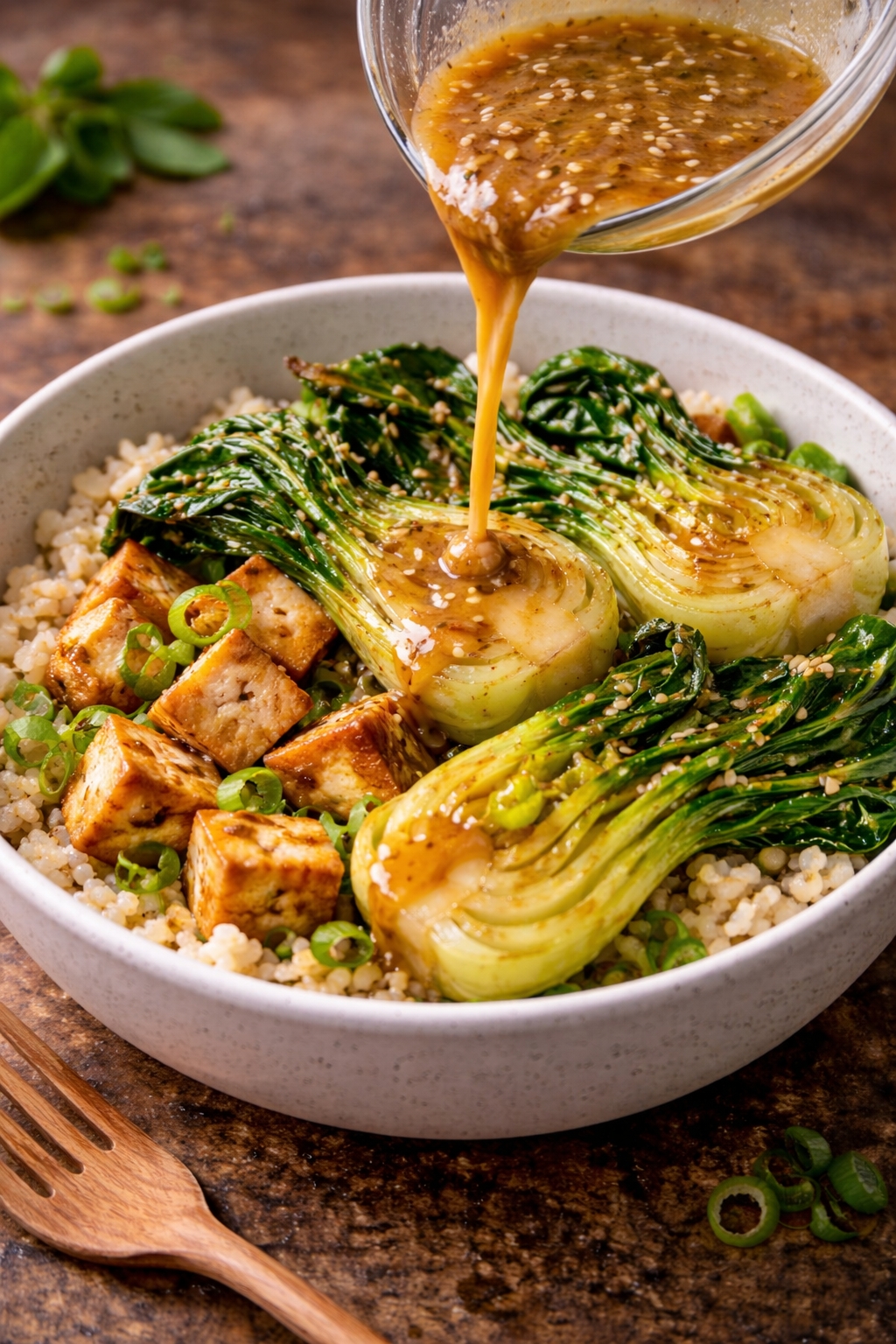
Roasted Bok Choy and Miso Bowl - This recipe works because it applies roasting and emulsification techniques that maximize flavor from humble vegetables while keeping the bowl balanced and satisfying. After testing sautéed and steamed versions of bok choy, the results were consistently watery and flat, with muted flavor and limp texture. Roasting was the turning point: high heat drives off excess moisture, allowing the natural sugars in bok choy to caramelize while concentrating its savory, slightly sweet flavor. Splitting the bok choy lengthwise exposes more surface area, which guarantees crisp edges and a tender interior instead of soggy leaves. The miso dressing is built as an emulsion rather than a simple mix; whisking miso with warm water first smooths it out, then slowly incorporating oil creates a glossy, cohesive sauce that clings evenly to grains and vegetables. I found that adding miso after roasting, rather than before, preserves its fermented complexity and prevents bitterness that can develop under high heat. Protein balance matters here as well: this bowl uses tofu and optional soft-boiled eggs to add structure and satiety, which aligns with the high-protein veggie bowl trend driving saves on Pinterest. Grain choice also plays a role—short-grain rice or farro absorbs the dressing and anchors the bowl so it feels complete, not like a side dish. This shows how basic ingredients create something special: bok choy, miso, and grains transform into a fusion miso bowl that feels modern, global, and intentional. The method is straightforward but delivers restaurant-style results because moisture control, roasting temperature, and sauce timing are respected. This aligns with my focus on technique over complexity, where understanding when to roast, when to emulsify, and when to finish guarantees a consistently satisfying, nutrient-dense bowl that works for meal prep, weeknight dinners, and visually driven saves.
Dietary Notes
- ✓ High-Protein Veggie Bowl
- ✓ Cabbage-Family Vegetables
- ✓ Meal-Prep Friendly
- ✓ Savory Umami Flavor
♥
Why You'll Love This
- Deep Umami Satisfaction: Miso dressing and roasted bok choy build savory flavor that feels rich and complete.
- Balanced Protein Bowl: Tofu, eggs, and grains create a filling, nutrient-dense meal.
- Strong Texture Contrast: Crisp roasted edges and tender centers keep every bite interesting.
- Flexible Fusion Format: Easy to adapt with different grains, proteins, or seasonal vegetables.
Roasted Bok Choy and Miso Bowl
👩🍳 Author: Abderrahmane
⏰ Prep Time: 20min
❄️ Cool Time: 0
🔥 Cook Time: 30min
🥨 Yield: 4
🍞 Method: Roasting
🌾 Diet: Vegetarian
★
★
★
★
★
Leave a review
1x
2x
3x
Ingredients
- 6 heads baby bok choy, halved lengthwise
- 3 tbsp olive oil
- 3/4 tsp salt
- 14 oz firm tofu, cubed
- 1 1/2 cups cooked short-grain rice or farro
- 3 tbsp white miso paste
- 3 tbsp warm water
- 1 tbsp rice vinegar
- 1 tsp sesame oil
- 3 scallions, sliced
- 1 tbsp sesame seeds
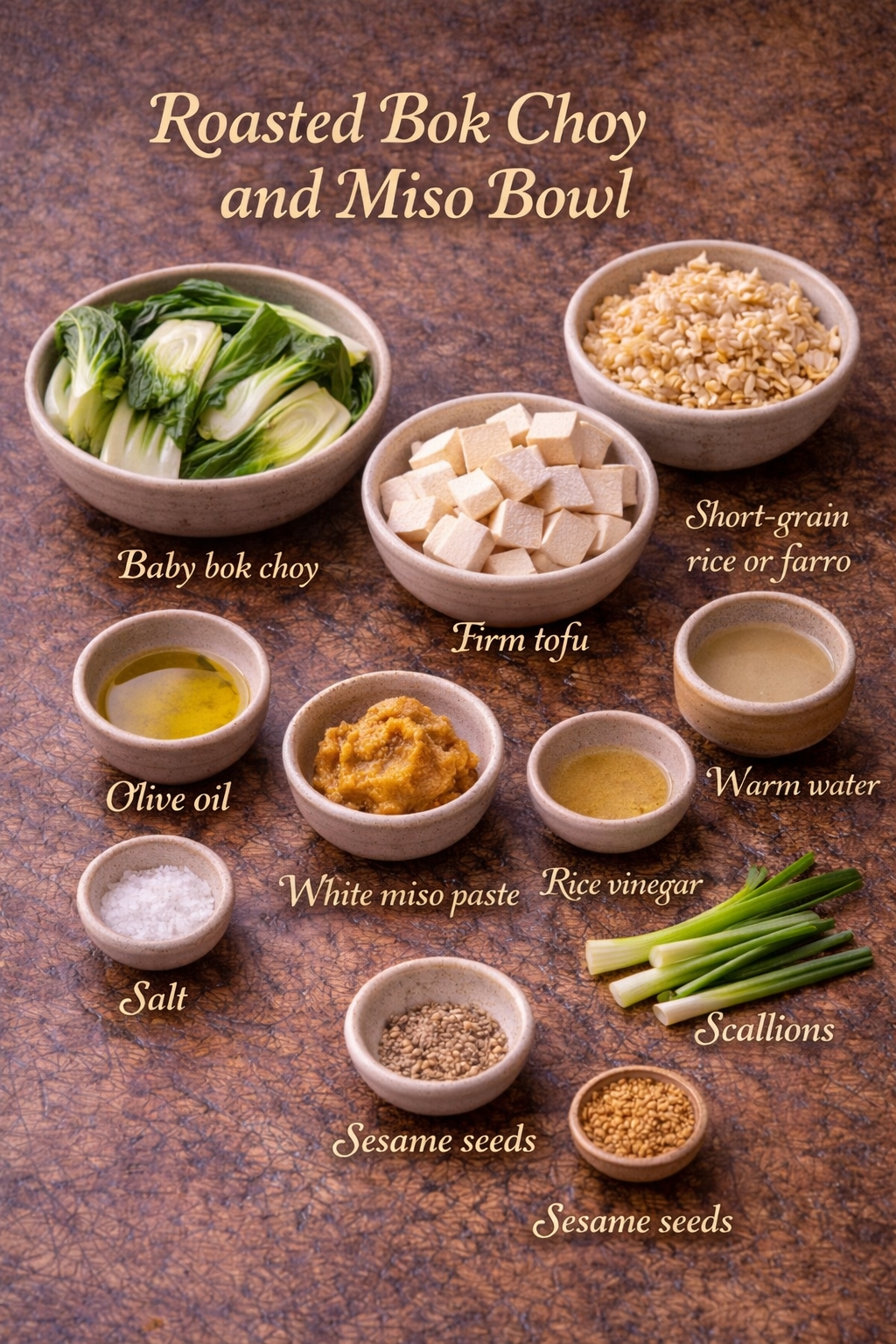
Ingredient Notes:
- baby bok choy, halved lengthwise Halving bok choy exposes more surface area so it can roast instead of steam; this guarantees crisp edges and tender centers instead of limp leaves.
- olive oil Olive oil helps conduct heat and supports caramelization; using enough prevents sticking and promotes even browning.
- salt Light seasoning before roasting draws out moisture and sharpens flavor without overpowering the miso dressing.
- firm tofu, cubed Firm tofu adds protein and structure; roasting drives off moisture so the cubes stay chewy and satisfying.
- short-grain rice or farro These grains absorb dressing well, anchoring the bowl and preventing it from tasting thin or watery.
- white miso paste White miso provides umami and gentle sweetness; whisking it smooth before adding oil prevents lumps.
- warm water Warm water loosens miso paste, making emulsification easier and creating a smooth, glossy dressing.
- rice vinegar Vinegar adds brightness that balances miso’s saltiness and keeps the bowl tasting fresh.
- sesame oil Sesame oil adds nutty aroma; use sparingly so it enhances rather than dominates the dressing.
- scallions, sliced Scallions add fresh crunch and color contrast, lifting the roasted flavors.
- sesame seeds Sesame seeds add subtle crunch and reinforce the nutty notes of the miso dressing.
Instructions
-
1Step 1: Preheat the oven to 425°F and line a baking sheet with parchment - high heat is essential for driving off moisture and creating caramelized edges.
-
2Step 2: Toss bok choy with olive oil and salt, arranging cut-side down on the sheet - direct contact encourages browning and crisp texture.
-
3Step 3: Roast bok choy for 18–22 minutes until edges are crisp and centers are tender - roasting concentrates flavor and avoids sogginess.
-
4Step 4: Roast tofu on a separate tray until golden and firm - removing excess moisture improves texture and protein satisfaction.
-
5Step 5: Whisk miso with warm water until smooth, then emulsify with vinegar and sesame oil - proper emulsification creates a glossy dressing.
-
6Step 6: Cook grains according to package directions until tender - well-cooked grains anchor the bowl and absorb flavor.
-
7Step 7: Assemble bowls with grains, roasted bok choy, and tofu - layering keeps textures distinct.
-
8Step 8: Spoon miso dressing over the bowl and toss lightly - coating evenly builds savory depth.
-
9Step 9: Finish with scallions and sesame seeds just before serving - fresh garnish adds contrast and aroma.
Nutrition Facts
Calories 460
Protein 24g
Carbs 48g
Fiber 8g
Sugar 6g
Fat 18g
Sodium 980mg
Potassium N/A
Serving Suggestions
Serve this bowl warm with the grains as the base, arranging roasted bok choy on top so the caramelized edges remain visible. Spoon the miso dressing over the bowl just before serving so it coats the vegetables without pooling at the bottom. Finish with sliced scallions, sesame seeds, or chili oil for contrast and aroma. This bowl pairs well with a light cucumber salad or pickled vegetables and is best enjoyed while the bok choy is still warm and slightly crisp, which highlights the roasted texture and savory miso flavor.
How to Store?
Store bowl components separately in airtight containers in the refrigerator for up to 4 days. Reheat grains and roasted bok choy gently in a skillet or microwave until just warmed through; overheating can soften the crisp edges. The miso dressing should be stored separately and stirred before use to re-emulsify. This recipe is ideal for make-ahead meal prep: roast vegetables and cook grains in advance, then assemble bowls as needed for quick, healthy dinners or lunches without sacrificing texture or flavor.
If you enjoyed this Roasted Bok Choy and Miso Bowl or any other recipe on my blog,
please leave a ⭐ star rating and let me know how it went
in the comments below. I appreciate you taking time to read about this recipe, thank you!

Leave a Comment