Qatayef (Middle Eastern Stuffed Pancakes for Ramadan Iftar) - Qatayef are soft Middle Eastern stuffed pancakes traditionally served during Ramadan iftar and loved across the Arab world as one of the most iconic Ramadan sweets. These delicate pancakes are made from a light semolina batter that cooks on one side only, creating a fluffy surface filled with tiny bubbles that hold sweet fillings beautifully. Each pancake is folded and stuffed with cream, ricotta, or crushed pistachios before being finished with fragrant syrup flavored with rose water or orange blossom. The result is a dessert that feels both comforting and festive, making it one of the most recognizable Arabic dessert recipes during the holy month. Whether served warm after sunset or prepared ahead for gatherings, this ramadan qatayef recipe is a perfect example of traditional Ramadan treats that combine soft texture, fragrant syrup, and nutty sweetness in every bite.
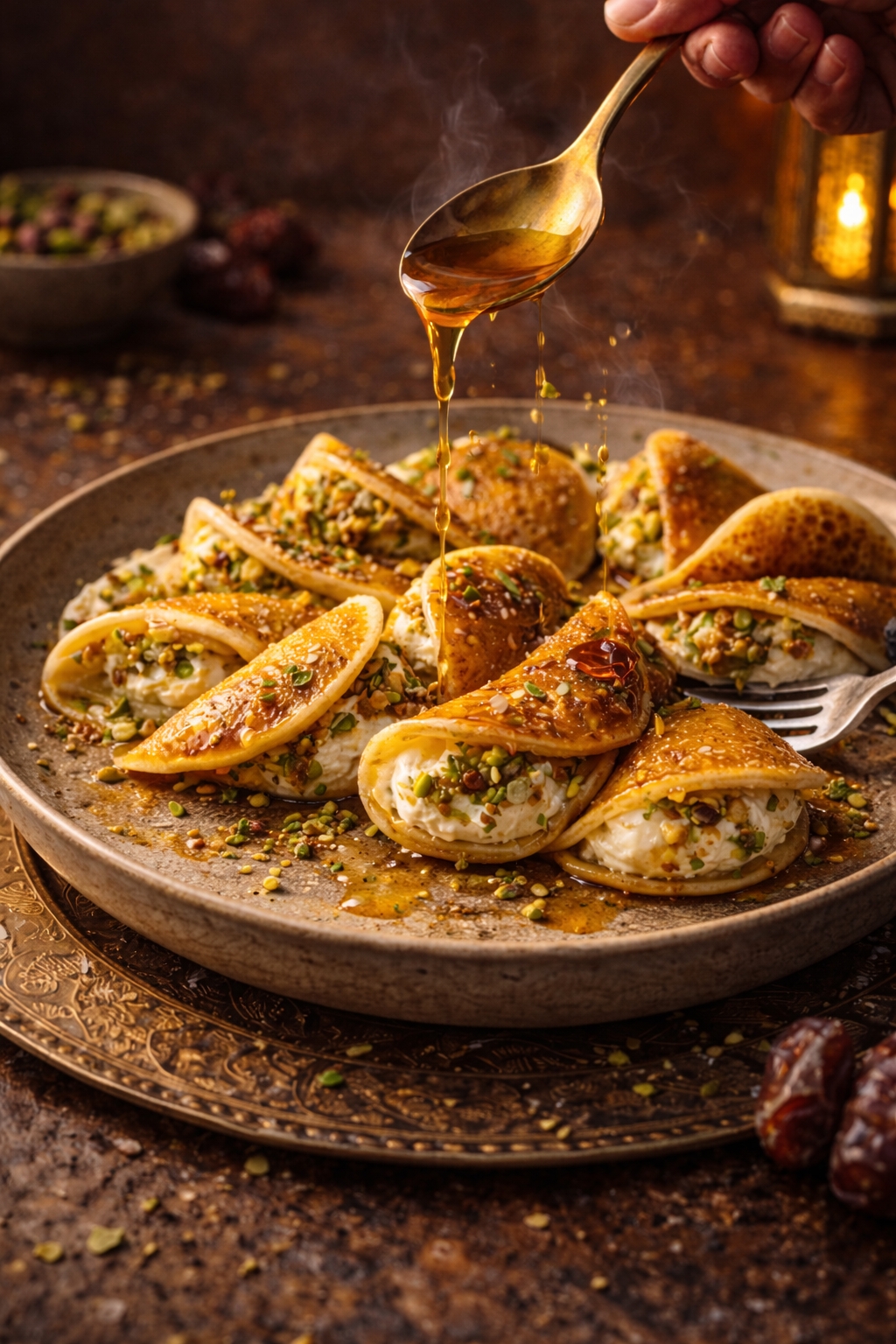
Qatayef (Middle Eastern Stuffed Pancakes for Ramadan Iftar) - This ramadan qatayef recipe works because it balances fermentation, controlled heat, and syrup infusion to create the unique texture associated with traditional Middle Eastern stuffed pancakes. The batter begins with flour and semolina, which together create the ideal structure: flour provides elasticity while semolina adds gentle grain texture that helps the pancake surface trap bubbles as it cooks. During testing, skipping the resting step resulted in flat pancakes without the airy texture necessary for qatayef dessert success. Allowing the batter to rest activates yeast and begins fermentation, which produces carbon dioxide bubbles that form the signature porous surface. Cooking technique is equally important. Unlike Western pancakes, qatayef cook on one side only. The pan heat must remain moderate so the batter slowly forms bubbles without browning too quickly. Those bubbles create tiny pockets that later absorb syrup, which is essential for achieving the soft, moist texture expected in authentic Arabic dessert recipes. If the pan becomes too hot, the pancakes seal too quickly and cannot absorb syrup evenly. Gentle heat allows even expansion and ensures each pancake remains flexible enough to fold. Fillings vary widely across regions, but pistachios and sweet cream remain the most recognizable versions of this iftar dessert idea. Pistachios provide natural richness and vibrant green color that photographs beautifully for Ramadan dessert ideas. Cream fillings add softness and contrast the lightly chewy pancake texture. During recipe testing, combining cream with a small amount of sugar improved balance, preventing the dessert from tasting bland once syrup is added. The syrup itself defines the aroma of qatayef dessert. Sugar and water form the base, but rose water or orange blossom water provides the floral fragrance that distinguishes traditional Ramadan sweets. Adding lemon juice stabilizes the syrup and prevents crystallization while keeping the sweetness clean. The syrup should be warm rather than hot when poured so it coats the pancakes without making them soggy. From a culinary perspective, this dessert demonstrates how simple ingredients create extraordinary results when technique is respected. Fermentation builds softness, careful cooking forms texture, and syrup infusion brings fragrance. This philosophy aligns with my approach of focusing on method rather than complexity. Once the batter, cooking temperature, and syrup balance are understood, preparing Middle Eastern stuffed pancakes becomes surprisingly approachable even for beginners. Beyond flavor, qatayef holds cultural significance. Families often prepare dozens of pancakes together during Ramadan evenings, filling them with pistachios or cream and serving them after Iftar meals. Because they can be prepared in batches, qatayef are ideal for gatherings and celebrations, making them one of the most beloved traditional Ramadan treats. Their combination of soft pancakes, aromatic syrup, and nutty fillings ensures they remain a staple in Ramadan dessert ideas and continue inspiring modern interpretations of Arabic dessert recipes worldwide.
Dietary Notes
- ✓ Traditional Ramadan Dessert
- ✓ Festive Iftar Treat
- ✓ Batch Cooking Friendly
- ✓ Shareable Middle Eastern Sweet
♥
Why You'll Love This
- Authentic Ramadan Flavor: Fragrant syrup and pistachios capture classic qatayef dessert aroma.
- Unique Pancake Texture: One-sided cooking creates airy pockets that absorb syrup beautifully.
- Perfect for Gatherings: Qatayef are ideal Ramadan sweets to share with family and guests.
- Versatile Fillings: Cream, ricotta, or nuts allow endless variations of Arabic dessert recipes.
Qatayef (Middle Eastern Stuffed Pancakes for Ramadan Iftar)
👩🍳 Author: Abderrahmane
⏰ Prep Time: 35min
❄️ Cool Time: 10
🔥 Cook Time: 15min
🥨 Yield: 10
🍞 Method: Sautéing
🌾 Diet: Vegetarian
★
★
★
★
★
Leave a review
1x
2x
3x
Ingredients
- 1 cup all-purpose flour
- 1/2 cup semolina
- 1 tsp instant yeast
- 1 tbsp granulated sugar
- 1 cup warm water
- 1/2 tsp baking powder
- 1/2 cup crushed pistachios
- 1/2 cup sweet cream or ricotta
- 1 tbsp granulated sugar (for filling)
- 1 cup granulated sugar (for syrup)
- 1/2 cup water (for syrup)
- 1 tsp rose water or orange blossom water
- 1 tsp lemon juice
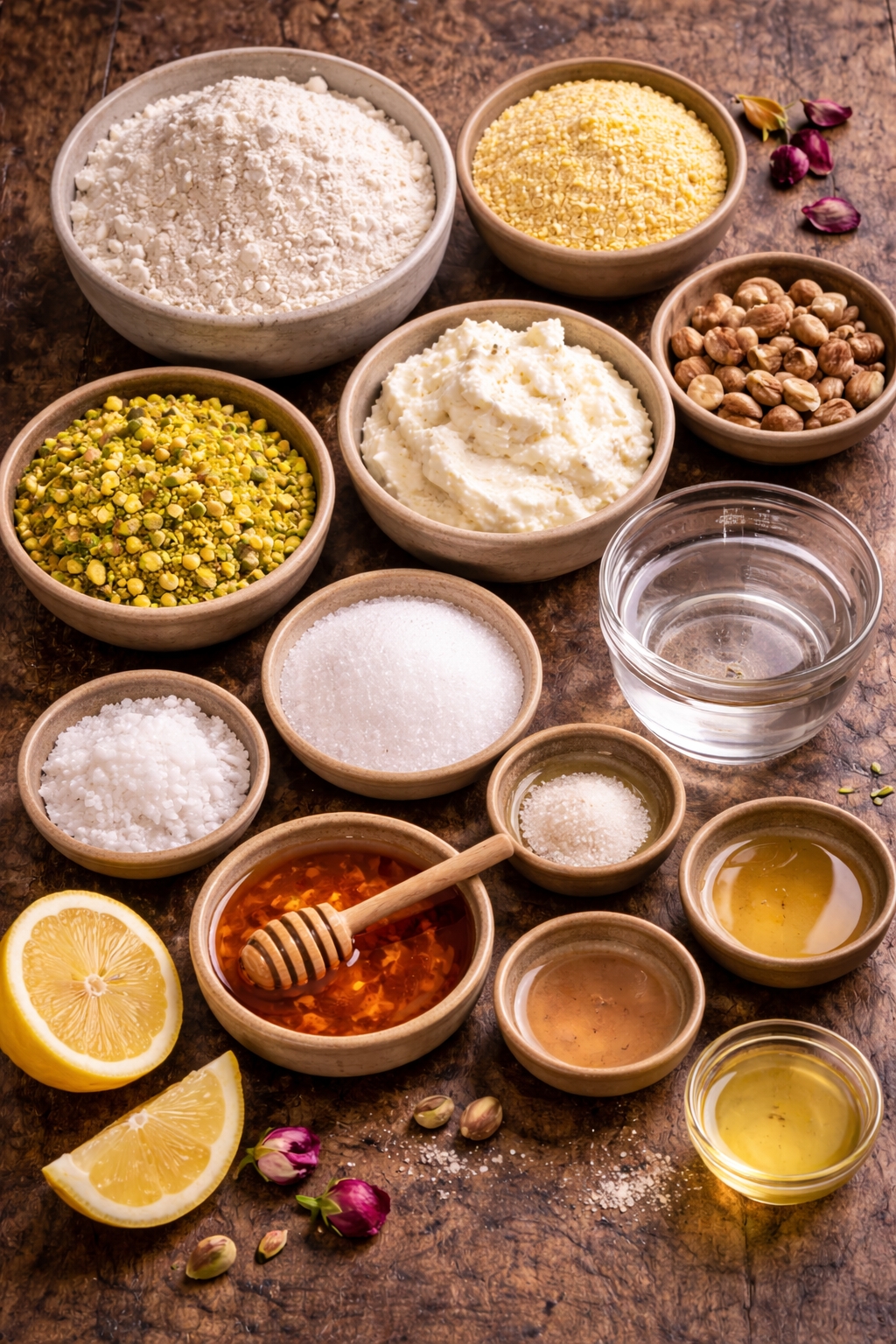
Ingredient Notes:
- all-purpose flour Flour provides the structural backbone for qatayef batter and allows pancakes to stay flexible enough for folding.
- semolina Semolina adds subtle grain texture that distinguishes authentic ramadan qatayef recipe pancakes from regular pancakes.
- instant yeast Yeast fermentation produces bubbles that create the porous surface ideal for absorbing syrup.
- crushed pistachios Pistachios add nutty richness and vibrant color typical in many Arabic dessert recipes.
- sweet cream or ricotta Cream fillings balance the lightly chewy pancake texture and create luxurious Ramadan sweets.
- rose water or orange blossom water These floral ingredients define the fragrance of traditional Ramadan treats and should be used sparingly for balance.
Instructions
-
1Step 1: Mix flour, semolina, yeast, sugar, and warm water until smooth and lump free - proper mixing ensures the batter ferments evenly for fluffy Middle Eastern stuffed pancakes.
-
2Step 2: Rest the batter for 30 minutes until slightly bubbly - fermentation activates yeast and develops the signature airy qatayef dessert texture.
-
3Step 3: Stir baking powder into the batter just before cooking - this boosts bubble formation which creates syrup-absorbing pockets.
-
4Step 4: Heat a nonstick skillet over medium heat and pour small rounds of batter - moderate heat allows bubbles to develop without burning.
-
5Step 5: Cook pancakes on one side only until bubbles cover the surface and the top sets - one-sided cooking forms the signature qatayef pancake texture.
-
6Step 6: Remove pancakes and cover with cloth to keep soft - trapping steam keeps them flexible for folding.
-
7Step 7: Mix pistachios, cream, and sugar to form filling - balanced sweetness enhances traditional Ramadan sweets flavor.
-
8Step 8: Fill each pancake and fold into a half-moon shape - gentle folding keeps the delicate structure intact.
-
9Step 9: Prepare syrup by simmering sugar, water, lemon juice, and rose water until slightly thickened - fragrant syrup defines Arabic dessert recipes.
-
10Step 10: Drizzle warm syrup over filled pancakes and garnish with pistachios before serving - syrup infusion completes the authentic ramadan qatayef recipe experience.
Nutrition Facts
Calories 290
Protein 6g
Carbs 45g
Fiber 2g
Sugar 28g
Fat 9g
Sodium 120mg
Potassium N/A
Serving Suggestions
Serve qatayef warm shortly after assembling so the pancakes remain soft and the syrup coats each piece gently. Arrange the stuffed pancakes on a large platter and drizzle with fragrant rose or orange blossom syrup so it glistens lightly across the surface. Garnish generously with crushed pistachios for both flavor and color contrast. These Middle Eastern stuffed pancakes pair beautifully with mint tea or Arabic coffee and are commonly served immediately after the main Iftar meal. For gatherings, prepare multiple platters so guests can enjoy fresh portions without waiting.
How to Store?
Store leftover qatayef refrigerated in airtight containers for up to three days. Reheat gently in a warm oven for a few minutes so the pancakes soften again without drying. Syrup can be reheated separately and drizzled just before serving to restore moisture. Unfilled pancakes can also be frozen for up to two months and thawed when needed, making them perfect for preparing Ramadan dessert ideas ahead of time. When reheating, avoid high heat which may cause the syrup to caramelize and alter the delicate texture of these traditional Ramadan treats.
If you enjoyed this Qatayef (Middle Eastern Stuffed Pancakes for Ramadan Iftar) or any other recipe on my blog,
please leave a ⭐ star rating and let me know how it went
in the comments below. I appreciate you taking time to read about this recipe, thank you!

Leave a Comment