Meat and Prunes Tagine - This meat and prunes tagine is a deeply comforting North African dish built around tender slow-cooked meat, warm aromatic spices, a glossy savory sauce, and soft sweet prunes that bring beautiful contrast to every bite. The meat becomes fork-tender as it simmers slowly with onions, garlic, ginger, cinnamon, and broth, while the prunes soften just enough to enrich the sauce with a natural sweetness that feels luxurious instead of sugary. The final dish is rich, fragrant, and layered, with the kind of sweet-savory balance that makes Moroccan tagine recipes so memorable and so widely searched by people looking for authentic comfort food, special occasion dinners, and one-pot meals with strong flavor. This is the sort of recipe that looks elegant on the table but is grounded in classic home cooking. It feels warm, celebratory, and deeply satisfying, whether served at a family meal, holiday dinner, or weekend gathering. The sauce coats couscous beautifully, the spices make the kitchen smell incredible, and the contrast between savory meat and sweet fruit is exactly what gives this dish its lasting appeal in Moroccan cuisine and in modern global recipe trends.
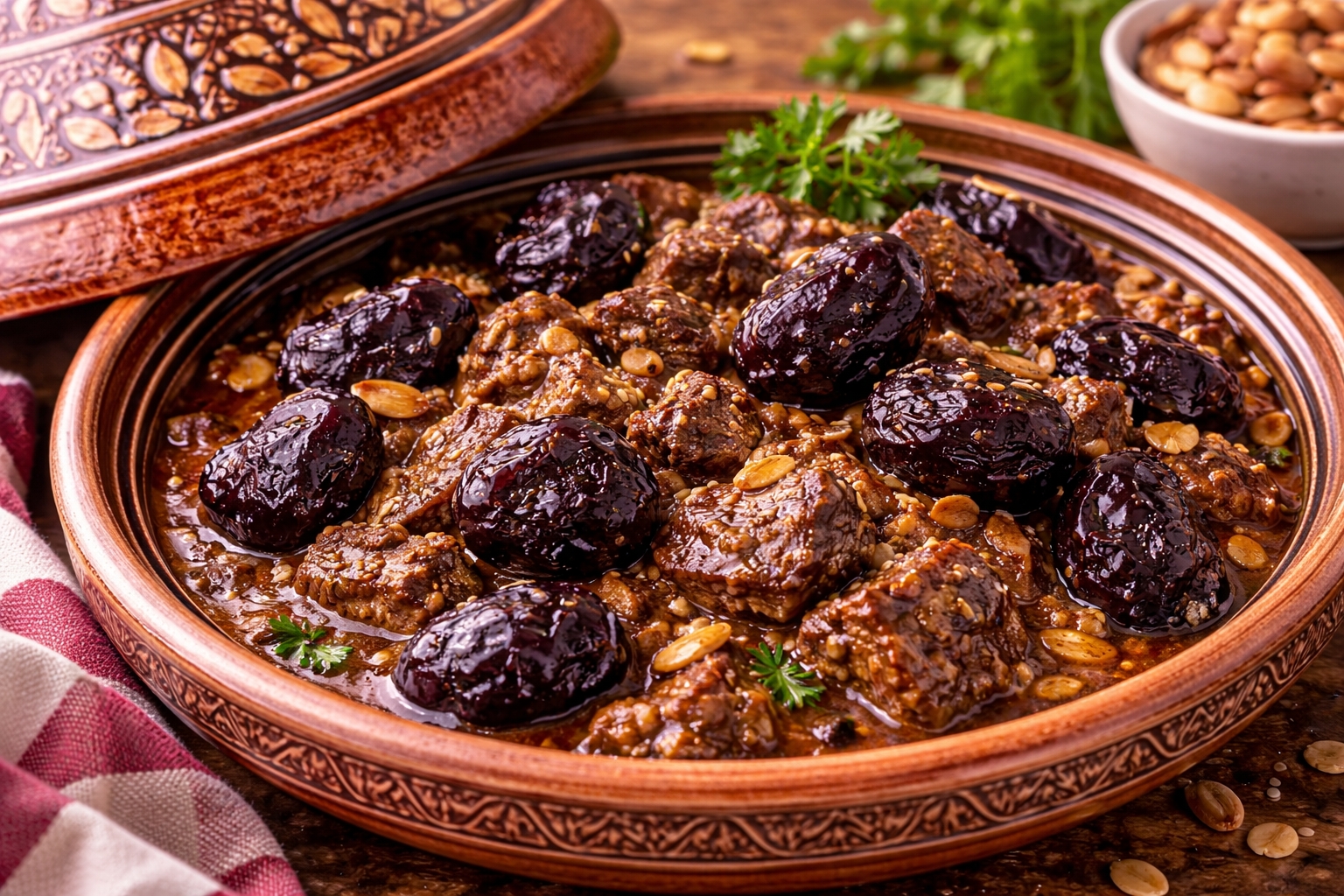
Meat and Prunes Tagine - This recipe works because the sweetness is layered thoughtfully instead of simply added at the end, and because the meat is given the time it needs to become truly tender. Browning the meat first is essential because it creates the deep base flavor that supports the whole dish. Without that step, the stew can taste flat even if the spices are correct. Onions are cooked until soft and beginning to collapse, which gives body to the sauce and creates the silky stew-like texture people expect from a slow-cooked tagine. The spice blend is warm and aromatic rather than aggressively hot. Cinnamon, ginger, turmeric, black pepper, and saffron or paprika each play a role in building fragrance, warmth, and color. After testing different balances, I found that keeping the cinnamon noticeable but not dominant creates the best sweet-savory effect once the prunes are added. Too much cinnamon pushes the dish toward dessert-like sweetness. Too little and the tagine loses part of its signature warmth. The prunes should be added late enough to keep some structure, but early enough to absorb sauce and soften into a glossy finish. That timing matters because the best meat and prunes tagine has distinct fruit pieces suspended in the sauce rather than fruit that has dissolved completely or stayed separate and dry. This shows how a traditional recipe becomes more successful when texture is treated as carefully as flavor. The method is straightforward but delivers professional results, which aligns with my focus on technique over complexity. A little honey can be added to the fruit stage if you want a more classic celebratory touch, while toasted almonds or sesame seeds can finish the dish with extra richness and texture. The broth reduces into a polished sauce, not a watery soup, and the meat should be soft enough to break apart easily while still holding shape in the serving dish. The final result is the kind of dish people search for when they want authentic Moroccan tagine, sweet and savory meat stew, comforting family dinner recipes, slow-cooked North African food, or impressive one-pot meals with real flavor depth. It is deeply aromatic, richly colored, and highly memorable, with a balance that makes every spoonful feel both comforting and special. This recipe is also excellent for make-ahead meals because the sauce becomes even more integrated after resting, which is one reason meat and prunes tagine remains such a strong choice for gatherings, dinner parties, and holiday-style menus.
Dietary Notes
- ✓ Traditional Moroccan Comfort Food
- ✓ Slow-Cooked Family Dinner
- ✓ Sweet and Savory One-Pot Meal
- ✓ Special Occasion Tagine
♥
Why You'll Love This
- Tender Slow-Cooked Meat: The long gentle simmer creates a rich, fork-tender texture that feels deeply comforting.
- Balanced Sweet-Savory Flavor: Warm spices and soft prunes create the signature contrast that makes Moroccan tagine so memorable.
- Elegant Yet Practical: This one-pot recipe looks impressive enough for guests but is rooted in simple home cooking technique.
- Even Better the Next Day: The sauce becomes more developed and cohesive after resting, making it excellent for make-ahead meals.
Meat and Prunes Tagine
👩🍳 Author: Abderrahmane
⏰ Prep Time: 25min
❄️ Cool Time: 10
🔥 Cook Time: 95min
🥨 Yield: 6
🍞 Method: Simmering
🌾 Diet: None
★
★
★
★
★
Leave a review
1x
2x
3x
Ingredients
- 2 lb beef chuck or lamb shoulder, cut into chunks
- 2 tbsp olive oil
- 2 large yellow onions, thinly sliced
- 4 cloves garlic cloves, minced
- 1 tsp ground ginger
- 1 tsp ground cinnamon
- 1 tsp ground turmeric
- 1 tsp paprika
- 1/2 tsp black pepper
- to taste salt
- 2 cups beef or chicken broth
- 1 1/2 cups prunes
- 1 tbsp honey
- 1/4 cup toasted almonds or sesame seeds
- 2 tbsp fresh parsley, chopped
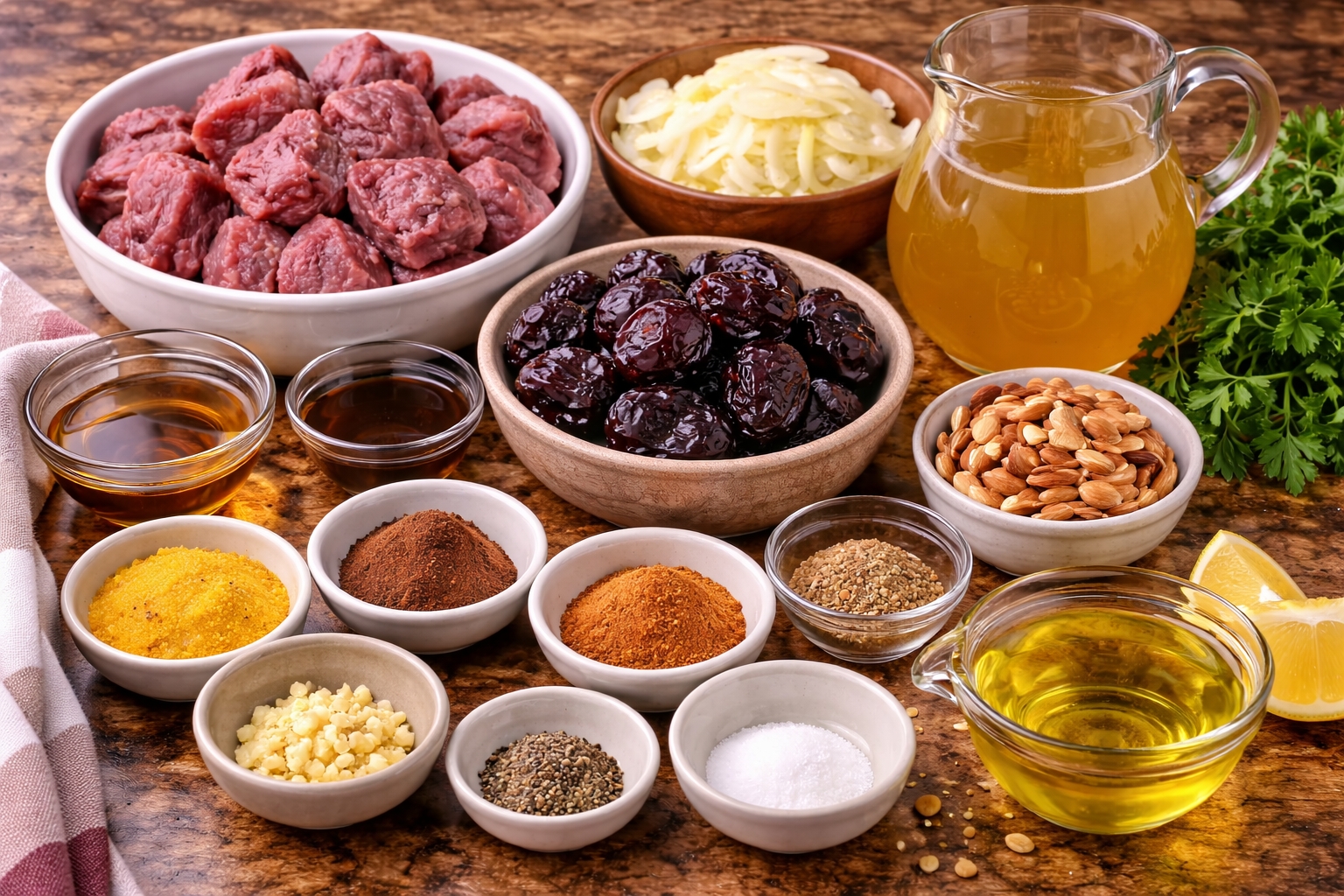
Ingredient Notes:
- beef chuck or lamb shoulder, cut into chunks Choose a cut with enough connective tissue to benefit from a slow simmer, because that is what turns a simple stew into a rich, fork-tender tagine. Leaner cuts can dry out before the sauce has time to fully develop.
- olive oil Olive oil is used first for browning, but it also carries the spice base and supports the silkiness of the finished sauce. Use enough to coat the pan well without making the tagine greasy.
- yellow onions, thinly sliced Onions are essential in Moroccan-style slow cooking because they soften into the braising liquid and create natural thickness and sweetness. Slice them thinly so they melt into the sauce rather than staying in large noticeable chunks.
- garlic cloves, minced Garlic provides the savory depth that anchors the sweeter elements like cinnamon and prunes. It should be cooked only until fragrant so it enriches the dish without becoming bitter.
- ground ginger Ground ginger adds warmth and brightness that lifts the richness of the meat and keeps the spice blend from feeling heavy. It is a defining background note in many traditional Moroccan recipes.
- ground cinnamon Cinnamon is what gives the tagine its soft sweet-spice character and helps bridge the gap between savory meat and sweet fruit. Use it with care so the dish stays balanced and deeply aromatic rather than dessert-like.
- ground turmeric Turmeric adds warm golden color and a gentle earthy note that makes the sauce look vibrant and feel more layered. It supports the overall spice profile without dominating the flavor.
- paprika Paprika rounds out the spice mix with color and mild sweetness, helping the stew feel more complete and richer in appearance. It also complements the onions and prunes especially well.
- black pepper Black pepper adds subtle heat and keeps the sweetness of the prunes and cinnamon from becoming too soft. Freshly ground pepper gives the best fragrance and helps balance the dish.
- salt Salt should be added gradually throughout cooking because the sweetness of the fruit can mute seasoning if everything is added at the start. Tasting near the end is especially important for proper balance.
- beef or chicken broth Broth forms the braising liquid and eventually reduces into the glossy sauce that defines the tagine. Choose a broth with good flavor but moderate salt so you can control the final seasoning more precisely.
- prunes Prunes bring the classic sweet dimension that makes this Moroccan dish so distinctive and comforting. Add them later in the process so they soften and enrich the sauce without fully collapsing into it.
- honey Honey is optional, but a small amount can deepen the sweet finish and create a more celebratory style tagine. Use it lightly so the dish stays balanced and the natural prune flavor remains clear.
- toasted almonds or sesame seeds These garnishes add a final layer of texture and visual contrast that makes the dish look more complete and special-occasion ready. Toasted almonds are especially good when you want extra richness and crunch.
- fresh parsley, chopped Parsley freshens the final dish and adds a clean green lift against the warm spices and glossy sauce. Sprinkle it on just before serving so the tagine keeps both its freshness and its polished appearance.
Instructions
-
1Step 1: Brown the meat in olive oil over medium-high heat until it develops deep color on several sides - this creates the savory foundation that makes the finished tagine taste rich and fully developed rather than flat.
-
2Step 2: Add the onions and cook them slowly until soft and beginning to caramelize, then stir in the garlic - this builds the silky aromatic base that gives the sauce body and sweetness.
-
3Step 3: Stir in the ginger, cinnamon, turmeric, paprika, black pepper, and salt until fragrant - this blooms the spices and distributes their warmth evenly through the pot.
-
4Step 4: Pour in the broth, return the meat fully to the pot, and simmer gently until the meat is very tender and the sauce is reduced and glossy - this slow braising stage is what creates the classic comforting texture of a true tagine.
-
5Step 5: Add the prunes and optional honey for the final stage of cooking until the fruit softens and the sauce thickens around it - this creates the sweet-savory balance that defines a classic meat and prunes tagine.
-
6Step 6: Rest briefly, then garnish with toasted almonds or sesame seeds and parsley before serving - this final touch adds contrast, freshness, and a more polished traditional presentation.
Nutrition Facts
Calories 520
Protein 34g
Carbs 24g
Fiber 3g
Sugar 17g
Fat 31g
Sodium 540mg
Potassium N/A
Serving Suggestions
Serve the meat and prunes tagine hot in a shallow serving dish, with the meat arranged so the glossy sauce and softened prunes remain visible on top. Finish with toasted almonds or sesame seeds if desired, plus a small shower of chopped parsley for freshness and color. This dish pairs beautifully with couscous, warm flatbread, or soft semolina bread that can soak up the fragrant sauce. For a more traditional table, place extra prunes around the platter and serve with small bowls of olives or salad on the side, letting the tagine remain the centerpiece. It is especially satisfying when served after a brief rest, when the sauce has thickened slightly and the sweet-savory aroma is fully developed. The contrast between tender meat, silky onions, and soft fruit is at its best when eaten hot and spooned generously over grains or bread.
How to Store?
Store leftovers in an airtight container in the refrigerator for up to 4 days. Reheat slowly on the stovetop over low heat with a splash of broth or water if the sauce has reduced too much, stirring gently so the fruit stays intact. This dish freezes well for up to 2 months, though the prunes will soften further after thawing. For the best result, thaw overnight in the refrigerator and warm gently rather than boiling. The tagine is one of those recipes that often tastes even better the next day because the spices settle, the sauce deepens, and the sweetness becomes more integrated. If making ahead for guests, cook the dish fully, chill overnight, then reheat carefully and garnish just before serving. That approach gives you strong flavor development and a calmer final service without sacrificing the polished look of the finished meal.
Other Recipes You'll L❤️ve
If you enjoyed this Meat and Prunes Tagine or any other recipe on my blog,
please leave a ⭐ star rating and let me know how it went
in the comments below. I appreciate you taking time to read about this recipe, thank you!




Leave a Comment