Dark Chocolate Espresso Bark with Sea Salt - This dark chocolate espresso bark with sea salt is a glossy, snappy no-bake dessert that delivers deep cocoa richness with roasted coffee aroma and a clean, crisp break. The texture is firm and crisp when chilled, then melts smoothly on the tongue, while chopped almonds and cacao nibs add crunchy contrast on top. Espresso powder builds flavor by making the chocolate taste darker and more intense, and flaky salt sharpens every bite so it never tastes flat or overly sweet. This dessert bark recipe is fast, minimal-ingredient, and make-ahead friendly, making it a high-save treat for aesthetic snack boards, holiday trays, and easy no bake chocolate dessert cravings.
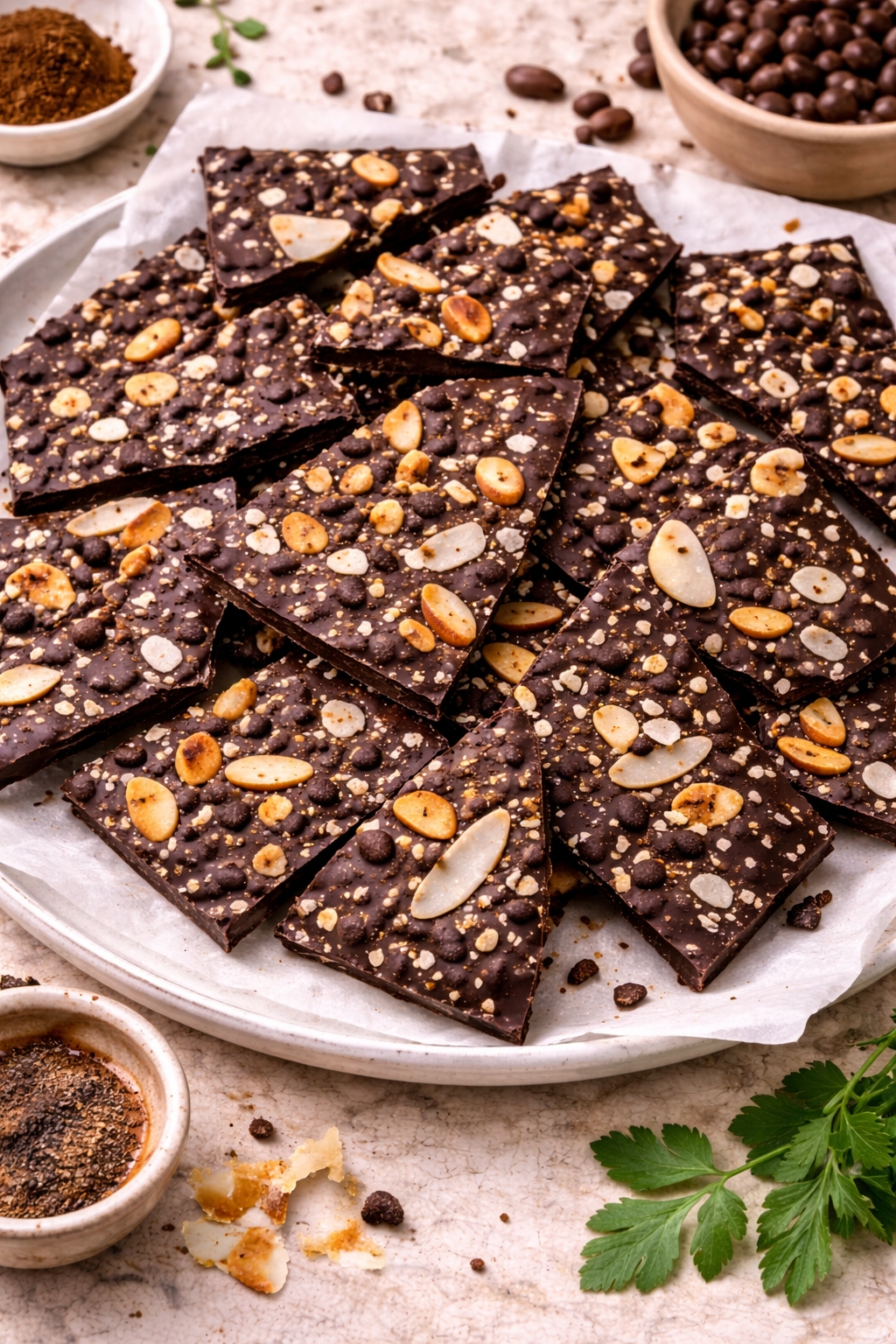
Dark Chocolate Espresso Bark with Sea Salt - This no-bake dessert bark works because it respects how chocolate behaves under heat and how bitterness, sweetness, and salt interact once the chocolate sets. After testing quick melts at high power, the bark looked streaky and felt grainy because the chocolate overheated and the cocoa butter separated, which can make a dessert bark recipe taste dull and look cloudy. The fix is technique over complexity: melt gently, stir often, and keep the chocolate warm and fluid without letting it get hot. When chocolate is melted slowly, it stays glossy and stable, and that matters because this dark chocolate espresso bark is built on a clean surface and a smooth snap. Espresso powder is added after the chocolate is melted so it dissolves evenly; adding it too early can clump and create bitter pockets that hit the tongue like dry dust. I also found that choosing dark chocolate in the 68–72% range is the sweet spot for espresso chocolate bark: it is intense enough to pair with coffee notes, but not so bitter that the sea salt chocolate bark becomes harsh. Vanilla is small but important; it rounds the roasted edge from espresso and makes the chocolate taste fuller without turning it sugary. Toppings are not decoration here, they are structure. Almonds bring a crisp, toasted crunch that breaks up the smooth melt, and cacao nibs add a dry, roasty snap that keeps the bark tasting chocolate-forward. The timing of toppings matters: scatter them while the chocolate is still fluid so they adhere naturally; pressing them in can smear the glossy finish and make the top look messy in photos. Flaky salt goes on last and lightly, because it should create contrast rather than dominate. A pinch on the surface also helps the bark look intentional, which is key for Pinterest saves on minimalist dessert boards. Chilling sets the bark quickly and creates a firm snap; room temperature setting can leave it softer and more prone to fingerprints. This shows how basic ingredients create something special: a bar of chocolate becomes a restaurant-style, giftable snack through careful melting, simple emulsification-like stirring, and smart finishing. The method is straightforward but delivers professional results because temperature control and timing are respected. This aligns with my focus on technique over complexity, where understanding why chocolate seizes, why fat separates, and when to add espresso guarantees consistent results. Once you learn this approach, you can repeat it confidently for no bake chocolate dessert variations, but this exact dark chocolate espresso bark with sea salt stays a favorite because it is bold, snappy, and reliably photo-ready.
Dietary Notes
- ✓ No-Bake Dessert Bark
- ✓ Minimal Ingredient Treat
- ✓ Make-Ahead Friendly
- ✓ Giftable Snack Pieces
♥
Why You'll Love This
- Bold Espresso-Chocolate Flavor: Espresso powder builds flavor so the cocoa tastes deeper and more intense with every bite.
- Fast, No-Oven Method: A simple melt-and-set process creates a polished dessert bark recipe with minimal effort.
- Crisp + Smooth Texture Contrast: Snappy chocolate with crunchy almonds and cacao nibs keeps the bite interesting.
- Consistent Results: Gentle melting and proper timing guarantee a glossy finish and clean snap every time.
Dark Chocolate Espresso Bark with Sea Salt
👩🍳 Author: Abderrahmane
⏰ Prep Time: 12min
❄️ Cool Time: 45
🔥 Cook Time: 0min
🥨 Yield: 12
🍞 Method: No-Bake
🌾 Diet: Vegetarian
★
★
★
★
★
Leave a review
1x
2x
3x
Ingredients
- 10 oz dark chocolate (68–72% cacao), chopped
- 1 tbsp espresso powder
- 1 tsp vanilla extract
- 2 tbsp almonds, chopped
- 1 tbsp cacao nibs
- 1/2 tsp flaky sea salt
- 1 tsp orange zest
- 2 tbsp toasted coconut flakes
- 1/8 tsp ground cinnamon
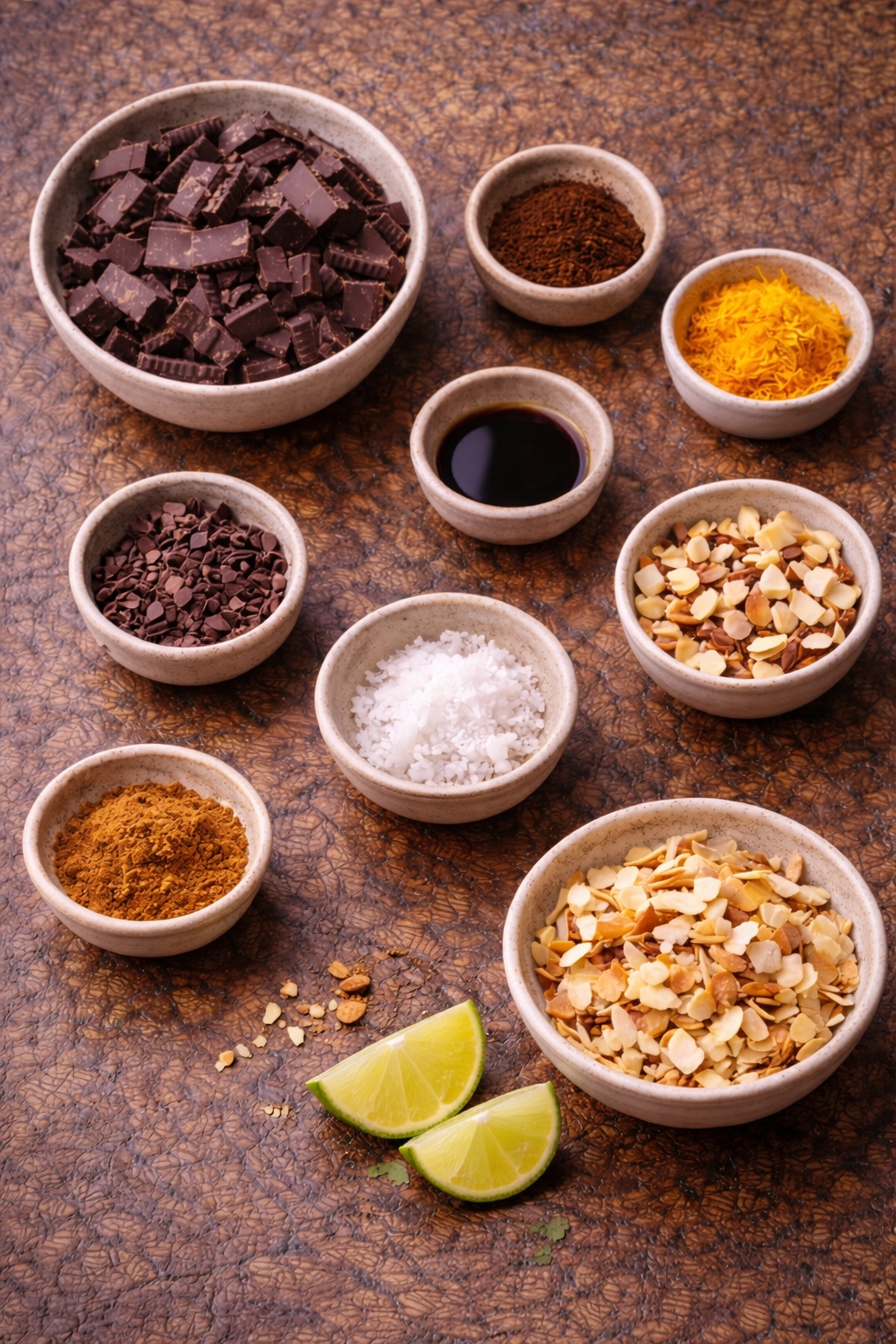
Ingredient Notes:
- dark chocolate (68–72% cacao), chopped Pick bar chocolate in the 68–72% range for this dark chocolate espresso bark; it melts smooth and sets snappy, and it balances espresso bitterness without tasting harsh or chalky when chilled.
- espresso powder Use fine espresso powder so it dissolves into warm chocolate without gritty texture; stir until the mixture looks glossy and uniform so the espresso chocolate bark tastes evenly roasted in every bite.
- vanilla extract Vanilla rounds the roasted coffee edge and makes the cocoa taste fuller; add it after the chocolate is melted and smooth so the aroma stays clean and the bark keeps its polished, no-bake finish.
- almonds, chopped Chop almonds small for even distribution and reliable crunch; lightly toasted almonds build flavor and give the dessert bark recipe a crisp contrast that stays satisfying against the smooth chocolate melt.
- cacao nibs Cacao nibs add a dry, roasty snap that reinforces the chocolate-forward profile; sprinkle evenly so you get consistent crunch and a bold look that helps sea salt chocolate bark stand out in photos.
- flaky sea salt Use flaky salt lightly on the surface so it adds contrast without making the bark salty; a small pinch sharpens sweetness and bitterness, making the dark chocolate espresso bark taste more focused and balanced.
- orange zest Orange zest is optional but powerful; it adds bright citrus aroma that pairs with espresso and dark chocolate, keeping the no bake chocolate dessert from feeling heavy while staying natural and not perfumey.
- toasted coconut flakes Toasted coconut adds crisp texture and subtle sweetness; add it on top rather than mixing in so it stays crunchy and keeps the dessert bark recipe looking clean, layered, and intentional.
- ground cinnamon A tiny pinch of cinnamon adds warmth that supports coffee notes; keep it minimal so it stays background and does not dominate the cocoa, preserving the bold espresso-chocolate identity.
Instructions
-
1Step 1: Line a rimmed baking sheet with parchment paper and smooth it flat, leaving a little overhang - the overhang makes removal easy and keeps the no-bake dessert bark from sticking or cracking during transfer.
-
2Step 2: Chop the dark chocolate into small, even pieces and place in a dry heatproof bowl - smaller pieces melt evenly, which keeps the texture smooth and reduces the risk of grainy, overheated chocolate.
-
3Step 3: Melt the chocolate gently using a double boiler or microwave in 20–30 second bursts, stirring thoroughly between each burst until mostly melted - gentle heat protects cocoa butter so the bark sets glossy and snappy.
-
4Step 4: Stir slowly until the last small pieces melt from residual heat, then add espresso powder and stir for 45–60 seconds until fully dispersed - this prevents clumps and guarantees the espresso chocolate bark tastes evenly roasted.
-
5Step 5: Mix in vanilla and, if using, a pinch of cinnamon and orange zest, stirring until the mixture looks glossy and uniform - finishing aromatics off strong heat keeps them clean and keeps bitterness from turning sharp.
-
6Step 6: Pour the chocolate onto the parchment and spread into an even layer about 1/4-inch thick using an offset spatula - even thickness guarantees a clean snap and helps the dessert bark recipe break into tidy shards.
-
7Step 7: Sprinkle almonds, cacao nibs, and toasted coconut evenly over the surface while the chocolate is still fluid, then tap the pan gently - timing helps toppings adhere and tapping releases bubbles for a smoother, photo-ready finish.
-
8Step 8: Finish with flaky sea salt scattered lightly across the top, then refrigerate 30–45 minutes until fully firm - salt on the surface adds contrast and chilling sets structure quickly for a crisp break.
-
9Step 9: Lift the bark using the parchment overhang and break into 12 irregular pieces by hand - irregular shards look artisanal, and breaking by hand avoids messy crumbs that can happen with a knife.
Nutrition Facts
Calories 200
Protein 3g
Carbs 17g
Fiber 4g
Sugar 11g
Fat 14g
Sodium 55mg
Potassium N/A
Serving Suggestions
Serve this dark chocolate espresso bark slightly chilled so it snaps cleanly and the surface stays glossy. Break it into irregular shards for a rustic, high-end look, then arrange pieces in loose piles on a simple plate so the toppings and flaky salt are visible. For a dessert board, pair the espresso chocolate bark with fresh berries, orange segments, or roasted nuts to add color contrast without stealing attention from the chocolate. If you are serving with drinks, coffee and espresso highlight the roasted notes, while unsweetened mint tea or black tea balances the richness. For gifting, stack shards between parchment sheets in a small box; it looks intentional, stays neat, and makes the no-bake dessert bark feel like a boutique treat. This bark is best served within 10 minutes of removing from the fridge so it stays snappy but not icy-cold, giving the smooth melt and crunchy toppings the best texture contrast.
How to Store?
Store the sea salt chocolate bark in an airtight container in the refrigerator for up to 14 days, separating layers with parchment paper to prevent sticking and to protect the glossy finish. If the fridge is humid, keep the container tightly sealed so the bark does not pick up odors or moisture that can dull the snap. For longer storage, freeze the bark up to 2 months: wrap pieces in parchment, place in a freezer-safe container, and thaw in the refrigerator before serving so condensation stays minimal. Avoid warm room storage near heat or sunlight, because chocolate can soften and lose definition, and fingerprints will show on a glossy surface. For make-ahead planning, prepare the bark 1–3 days before an event, keep it chilled, then break into shards the day of serving so the edges look fresh and the toppings stay crisp. If the bark looks slightly dull after storage, a brief 2–3 minute rest at cool room temperature brings back a cleaner sheen without melting.
If you enjoyed this Dark Chocolate Espresso Bark with Sea Salt or any other recipe on my blog,
please leave a ⭐ star rating and let me know how it went
in the comments below. I appreciate you taking time to read about this recipe, thank you!


Leave a Comment